We talk about artificial intelligence as if we already agree on what intelligence means.
For this discussion, I would define it as the ability to understand a situation, identify meaningful problems, investigate their causes, and decide whether they are worth solving—and for what purpose.
Today’s AI is an excellent worker. Give it a task, context, and a clear objective, and it can produce remarkable results.
But executing a task brilliantly still leaves the most important questions open:
Why does this problem exist? Are we addressing its cause or merely its symptoms? Does it need to be solved at all? What would solving it actually achieve?
AI can help explore these questions. The harder issue is how goals are chosen, how much of the surrounding reality is understood, and who lives with the consequences. A technically correct answer can still serve the wrong objective.
Humans also miss the bigger picture. Our intelligence is limited, biased, and frequently misdirected. Which brings me to a second question:
Who decided that humanity is the pinnacle of evolution?
We use ourselves as the benchmark for intelligence. That makes us a familiar reference point, but it hardly proves we represent its highest possible form.
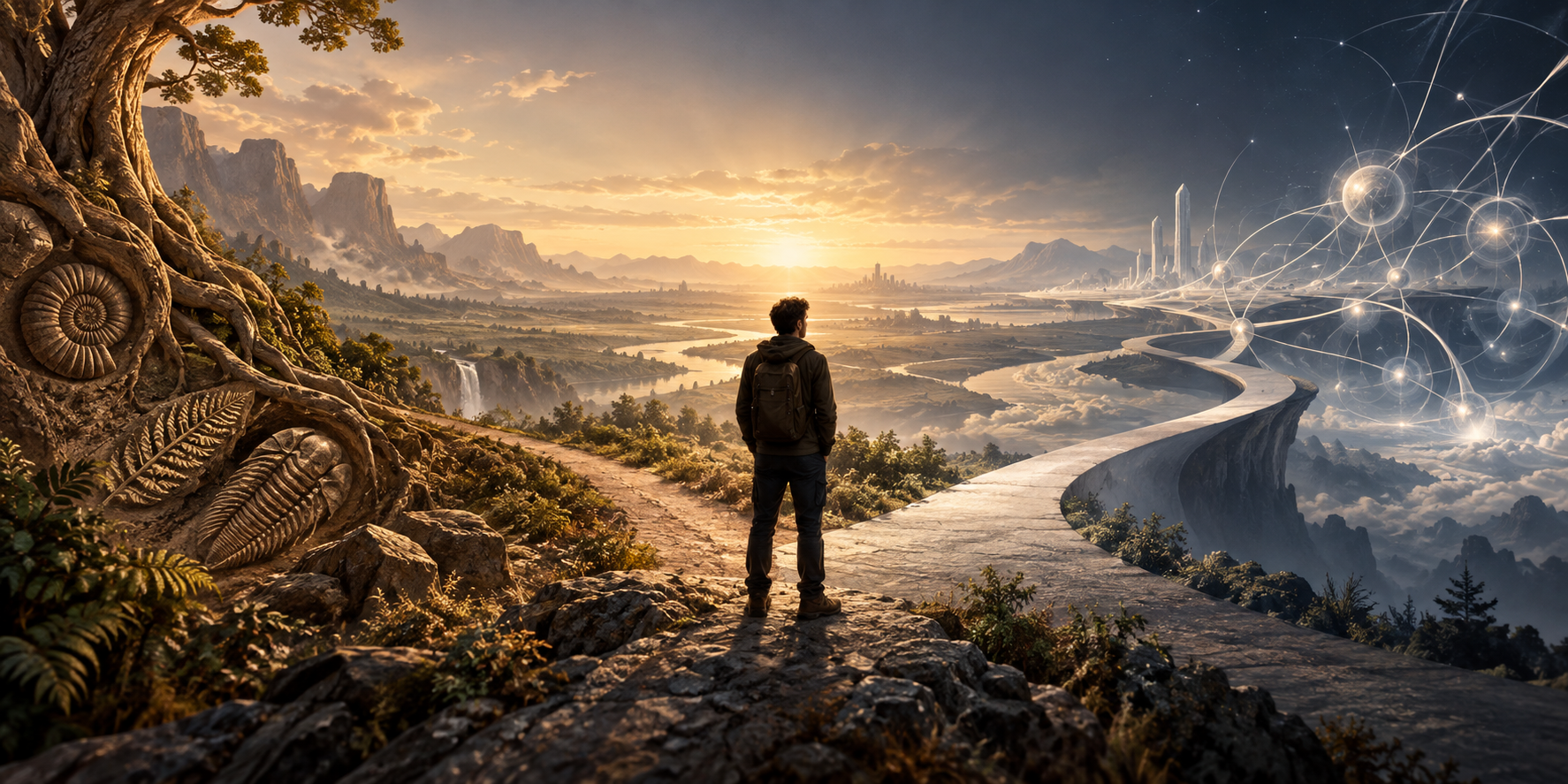
Perhaps humanity is a transition: biological beings made of flesh and bone, capable of creating something whose possibilities we cannot yet fully understand.
Calling us “instruments of evolution” is a metaphor, not a claim that evolution has a plan. It challenges our assumption that the story culminates in us.
None of this proves that AI is the next evolutionary step. It does suggest that our confidence in being the final one deserves scrutiny.
We should question both what qualifies AI as intelligent and what qualifies us to set intelligence’s ultimate limits.